Ballroom Dance Fundamentals for Beginners
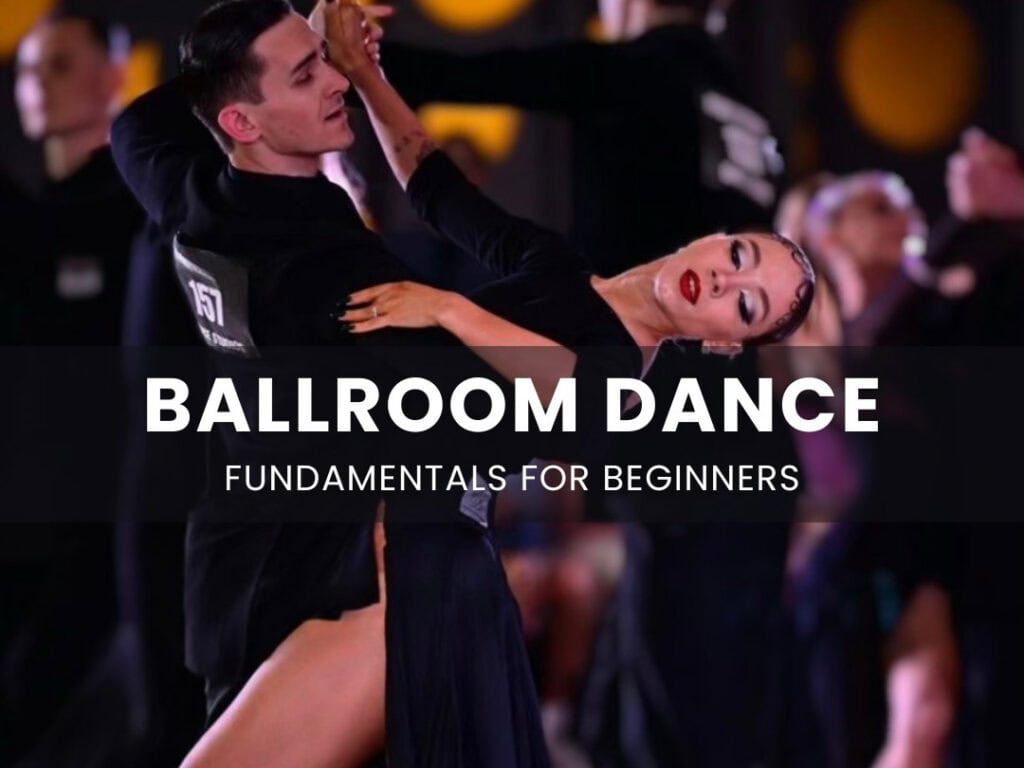
Join us on Saturday mornings for a fun and friendly introduction to the elegant world of ballroom dancing. This rotating series teaches new dancers classic ballroom dances in a supportive environment. This is a great class for beginners looking to explore ballroom dancing for social or performance purposes.
Schedule
Saturdays – Community Classes
- 11:30am – Ballroom Fundamentals
- 12:30pm – Introduction to Standard Ballroom
Class Description
Level 1: Ballroom Fundamentals – Saturdays 11:30am
Learn the foundational technique behind the classic American Smooth ballroom dances: Waltz, Foxtrot and Tango. Each month focuses on one dance, covering its basic steps, its characteristic timing, and the mechanics that give it its feel, from the rise and fall of Waltz to the continuous drive of Foxtrot and the staccato movement of Tango.
You’ll come away understanding not just what to do but why each dance moves the way it does. That’s what makes the steps click, and it’s what lets what you learn one month carry into the next.
No partner or experience needed.
Move up to Level 2 [Introduction to Standard Ballroom]
Once you’re comfortable with the fundamentals, Introduction to Standard Ballroom is the next step, taking you into the International Standard style. Our recommendation is to complete the full 3-dance rotation x2 (about six months) before moving up.
Pricing
- Community Class Rate: $15
Our Community Classes aim to provide more affordable options to our students and the general community at large.
Upcoming Schedule
- Oct: Foxtrot
- Nov: Waltz
- Dec: Tango
Dance Styles – American Smooth
Waltz
The Waltz is the classic starting point. Its slow 3/4 timing counts an even 1-2-3, and the signature rise and fall gives the dance its floating quality. Because the tempo is gentle and the box pattern returns to where it started, beginners can feel the mechanics without fighting for balance, which makes it the cleanest introduction to smooth technique.
Tango (American)
Tango is the contrast to the smooth styles. It has no rise and fall, a flatter footwork, and sharp staccato movement that stops and holds rather than flowing. That difference is the point, since feeling how Tango moves against Waltz and Foxtrot is what teaches you what each style actually is.
Foxtrot
The Foxtrot is smooth and continuous, built on a slow-quick-quick rhythm that keeps you moving across the floor. It reuses much of the footwork shape you meet in Waltz and adds a driving, walking quality on top, so it teaches the flow and floor craft that carry into every other smooth dance.
What Is Ballroom Dance?
Ballroom is the umbrella term for a whole family of partner dances, and it’s bigger than most people expect when they start. Broadly it splits into two worlds: the smooth, traveling dances that glide around the floor, and the rhythmic, spot dances that stay in one area and drive into the floor. Within those, you’ll hear names like Smooth, Standard, Latin and Rhythm, each a group of dances with its own character, hold and music.
This class lives in the American Smooth family, one of the smooth, traveling styles. Waltz, Foxtrot and Tango are three of its signature dances, and learning them teaches you the vocabulary that runs through all of ballroom: the closed hold two partners share, the rise and fall that lifts and lowers a dance like Waltz, and the timing counts (the slows and quicks) that tell you when to move. Once you know those, you can walk into any ballroom dance and understand what you’re looking at.
Location
240 West 37th Street
New York, NY 10018
Meet the Hosts


More Dates
More Ballroom at Danznik Studios